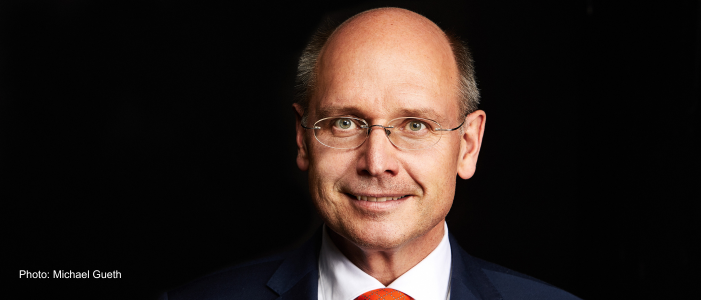
Between 14 and 15 May, Sofia became the focal point for European e-commerce, hosting leaders and discussions vital to the sector’s trajectory. During the event, Gero Furchheim, President of Ecommerce Europe, shared valuable insights into the Bulgarian market and the wider European e-commerce landscape during an interview with Yordan Barzakov of Nova TV.
Mr. Furchheim highlighted what he perceives as “huge potential” in terms of Bulgaria’s market, democracy, and development. Bulgaria’s e-commerce sector stands out with a “strong, double-digit growth”, achieving 20%. This performance is considered “very good against the average European level, which was about 8% last year”, especially as main markets found growth challenging. With only approximately 50% of Bulgarians currently shopping online, Mr. Furchheim sees “justified reasons to expect further growth”.
Looking at the European continent, e-commerce constitutes about 16% of total retail trade, a figure comparable to the United States. However, unlike the US market which has a common language and history, Europe’s strength lies in its diversity. To fully harness the potential of the growing European e-commerce market, Mr. Furchheim emphasised the need for “better regulation, more harmonised legislation, and easier access to the EU Single Market”. He underscored that the European market is built upon values such as freedom and democracy, and particularly “the freedom to do business”.
Consumer behaviour has undergone a significant transformation. Previously, people required a specific reason to shop online, but now, “it’s exactly the opposite. You need a reason to go to a physical store to buy”. This is because “everything is already around us”, with connectivity making information, recommendations, price negotiation, and seeking peer advice far simpler. Mr. Furchheim stated, “Everything is at our fingertips, and, at the end of the day, it is the consumers who evaluate whether this model is good or not”.
Innovation serves as the essential backdrop for the e-commerce sector. The industry has evolved from selling limited products like books and CDs to becoming an integrated part of daily life, driven by technological shifts like the move from desktop to smartphones, and enabling shopping “from wherever and whenever we want”. The next wave of change is anticipated with artificial intelligence (AI), which will influence interactions, assist businesses, and ultimately “change our world”. Mr. Furchheim noted, “We, in this sector, are always keeping pace with technology development,”. AI is seen as the “next big step”, offering the potential to solve thorny problems using digital processes and data. While AI integration is important, human interaction will retain a key role for situations requiring greater proximity, such as voice communication. Successful AI implementation relies on understanding its inner workings and proper application.
Despite the opportunities, the sector also faces substantial challenges. Running a business is inherently difficult. While regulations promoting environmental protection and product safety are viewed as positive requirements, there is also a “whole tsunami of regulations that make it difficult for small companies to comply with them”. Excessive and bureaucratic rules can impede competitiveness. A major hurdle is the lack of harmonisation, as “each country in the European Union has its own rules”. Competition from platforms outside Europe, particularly those distributing goods that may not meet European regulatory, safety, or environmental standards, presents another challenge. There is a clear need for policies to protect the market and ensure “the level playing field”.
Concerns about online fraud and security persist among consumers. The European Union has implemented common rules for customer identification, such as payment confirmation via code. Although initially challenging to implement, these rules have contributed to reducing fraud levels and creating a safer environment. However, as criminals also leverage technology and AI advances could enable sophisticated deceptions like voice imitation, combating fraud remains a “constant battle that we have to fight”. This ongoing effort is fundamental to establishing a common market based on shared values like safety and reliability.
As for social media, the younger generations are increasingly spending more time on these platforms, which influence their attitudes and beliefs. Social media has transformed how inspiration is found, information is shared, social impact is felt, and trends are established. This revolution presents significant opportunities, enabling not just large corporations but also influencers and small businesses to build their brand and engage directly with consumers.
In summary, e-commerce is described as “much more” than just online selling. It offers a comparable level of quality to physical stores, providing consumers with choice, information, and a vast range of goods. Events like the one in Sofia are beneficial for local companies to gain knowledge, find potential partners, and learn business practices. They also allow associations to understand the needs and concerns of businesses and advocate for effective policies in Brussels. The overarching objective remains a common market underpinned by shared values, safety, and reliability.