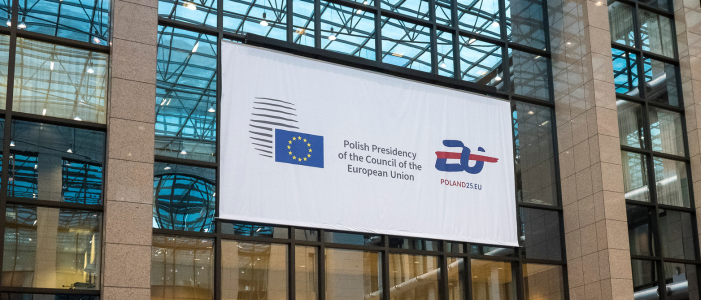
On 1 January 2025, Poland took over the presidency of the Council of the European Union (EU) for the second time, marking thirteen years since its first presidency, and twenty years since joining the EU. The presidency of the Council rotates among EU Member States every six months, during which the presiding country chairs meetings at all levels and ensures the continuity of the Councils’ work as co-legislator of the EU.
In preparation for its presidency, Poland unveiled an ambitious 52-page presidency programme in December. The programme places European security at the forefront, particularly in the context of Russia’s ongoing aggression against Ukraine. Operating under the motto “Security Europe!”, the Polish presidency is prioritising seven dimensions of European security including “ensuring security and freedom of business”.
Poland’s agenda includes commitments to deepening the Single Market, removing barriers to cross-border activity, and promoting the reduction of bureaucratic burdens. It also focuses on restoring a fair competition for EU industry on the global stage by improving trade policy instruments and enhancing enforcement mechanisms for goods entering the Single Market. This agenda item is a welcomed development and aligns closely with Ecommerce Europe’s ongoing campaign to ensure the level playing field and effective enforcement of EU law towards all e-commerce players active in the EU Single Market. No matter if a company is based inside or outside the Union, all players active in the Union should play by the same rules.
Regarding tech files, Poland plans to continue the work on artificial intelligence (AI), with particular focus on the AI Liability Directive (AILD), the implementation of AI factories, and AI governance. On data policy, despite limited details about its scope for now, the Polish presidency will prepare the work for the European Data Union Strategy, which the European Commission is expected to launch during the ongoing mandate. Trilogues on the GDPR enforcement procedure regulation will also progress in the next six months.
In consumer policy, the Polish Presidency is expected to finalise negotiations on the Alternative Dispute Resolution (ADR) for consumer disputes. In the area of customs, Poland will work towards securing a Council position and adopting a mandate for negotiations with the European Parliament on the Customs reform, which includes establishing the EU Customs Authority.
Lasty, environmental issues were not promoted as key priorities by the Presidency, indicating that sustainability will not be a primary focus over the next six months. Poland has notably emphasised that its approach to combating the causes and effects of climate change will focus on incentives and support measures, rather than relying on “bans and excessive burdens”. Nevertheless, Poland still plans to advance trilogues on Green Claims as well as on the Waste Framework Directive (WFD) with regard to food and textiles.