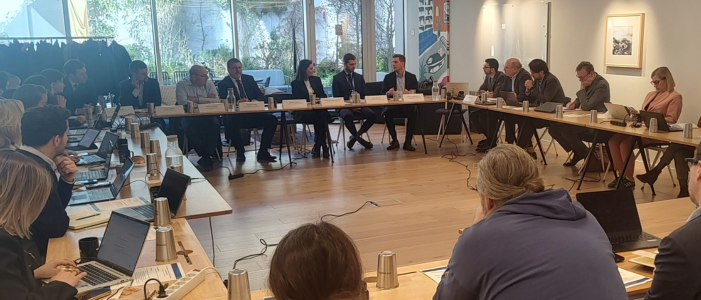
On 18 March, Ecommerce Europe organised an event to foster discussions around the question “How to avoid non-compliance at the point of departure in e-commerce B2C sales“.
The event brought together Ecommerce Europe’s members and EU policymakers to identify gaps, inefficiencies or misalignments in the current EU framework for e-commerce products and imports that could be better addressed in current or upcoming legislative initiatives. It was an opportunity to exchange views on the challenges that the e-commerce sector is currently facing, in particular due to an unlevel playing field, the high number of non-compliant and unsafe products imported into the EU market from third countries, and the resources of customs and market surveillance authorities, which are stretched more and more every day in the face of skyrocketing parcel volumes.
After Gero Furchheim, President of Ecommerce Europe, opened the event, Tadeusz Senda, Minister Counsellor for Customs and WCO Affairs at the Polish Presidency of the Council, gave a keynote speech providing insights on the ongoing Union Customs Code Union Customs Code (UCC) Reform negotiations in Council.
The discussions that followed were steered into two interactive panels:
- Can the EU market surveillance framework effectively prevent non-compliance in e-commerce?
- Can the EU customs framework complement market surveillance ensure compliance at the point of departure?
The overall aim of the event was to stimulate a joint reflection on market surveillance and customs and to expose possible synergies and overlaps between the two frameworks. In line with this idea, our panellists brought expertise from both fields:
- Alexandru Ion, Team Leader Digital Product Passport, DG GROW
- Vanesa Hernández Guerrero, Head of Unit on Customs legislation, DG TAXUD
- Frank Heijmann, Customs Counsellor at the Dutch Permanent Representation to the EU
- Casper Vanden Bilcke, Single Liaison Officer Market Surveillance, FOD Economie – SPF Economie, Belgium
- MEP Dirk Gotink, IMCO Rapporteur for UCC
- Pablo Muñiz, Partner at Van Bael & Bellis, Specialising in EU Customs law
Panellists and stakeholders notably touched upon the tools available, or to be finalised and implemented, to shift from correction to prevention of imported of non-compliant goods from the country of origin, which include, among others, the deemed importer’s non-fiscal obligations, the Digital Product Passport (DPP), and the use of advanced cargo information. We also discussed the practicalities, functioning, and timelines of implementation of the DPP, as well as issues related to data sharing, information, and structured dialogue between customs and market surveillance authorities. On the same line, participants exchanged views on the interactions between the Customs Reform and the Market Surveillance Regulation (MSR) cascade system, and the question of the responsibility of relevant players in the import chain. Finally, the Dutch proposal for customs warehouses in the EU and the handling fee proposed in the Commission’s E-commerce Communication were debated.
Ecommerce Europe remains actively engaged in informing members of the policy and legislative discussions impacting cross-border e-commerce, notably on customs and imports, and at the same time connecting with policymakers and experts to share businesses’ feedback and expertise.